GoTo Foods manages a portfolio of nationally recognized food brands. As the organization expanded, inconsistencies across digital experiences created fragmentation in both user experience and internal workflows.
This project focused on defining a scalable design system and unified digital foundation to support multiple brands, streamline product development and improve overall user experiences.
Design Systems
UX/ UI Design
Web Design
As GoTo Foods grew its portfolio, its digital ecosystem became increasingly complex.
Faced with the challenge of managing multiple brands, each operating its own app and web platforms, brand, product and engineering teams lacked a shared system for scaling efficiently.
This resulted in teams duplicating effort across brands, creating inconsistent UX patterns and UI components and a product management nightmare juggling 7 distinct brand identities and experiences.
Slow development cycles and increased maintenance overhead made it almost impossible to scale, innovate and execute cohesive but flexible brand experiences.
While each brand required a distinct identity, the underlying user behaviors and functional needs were largely consistent. Customers were ultimately interacting with shared feature patterns of browsing, ordering and loyalty engagement.
The opportunity wasn’t to unify brands visually, but to standardize the system beneath them while preserving brand expression on top. Our focus prioritized separating structure and expression, informing a flexible design system that could scale across brands instead of solving for one-off interfaces.
We defined a shared functional foundation across components, flows and behaviors. Then layered on the brand’s visual identity, tone and styling. This created a shared language between Design, Product and Engineering, enabling cross-functional alignment that reduced ambiguity and accelerated delivery.
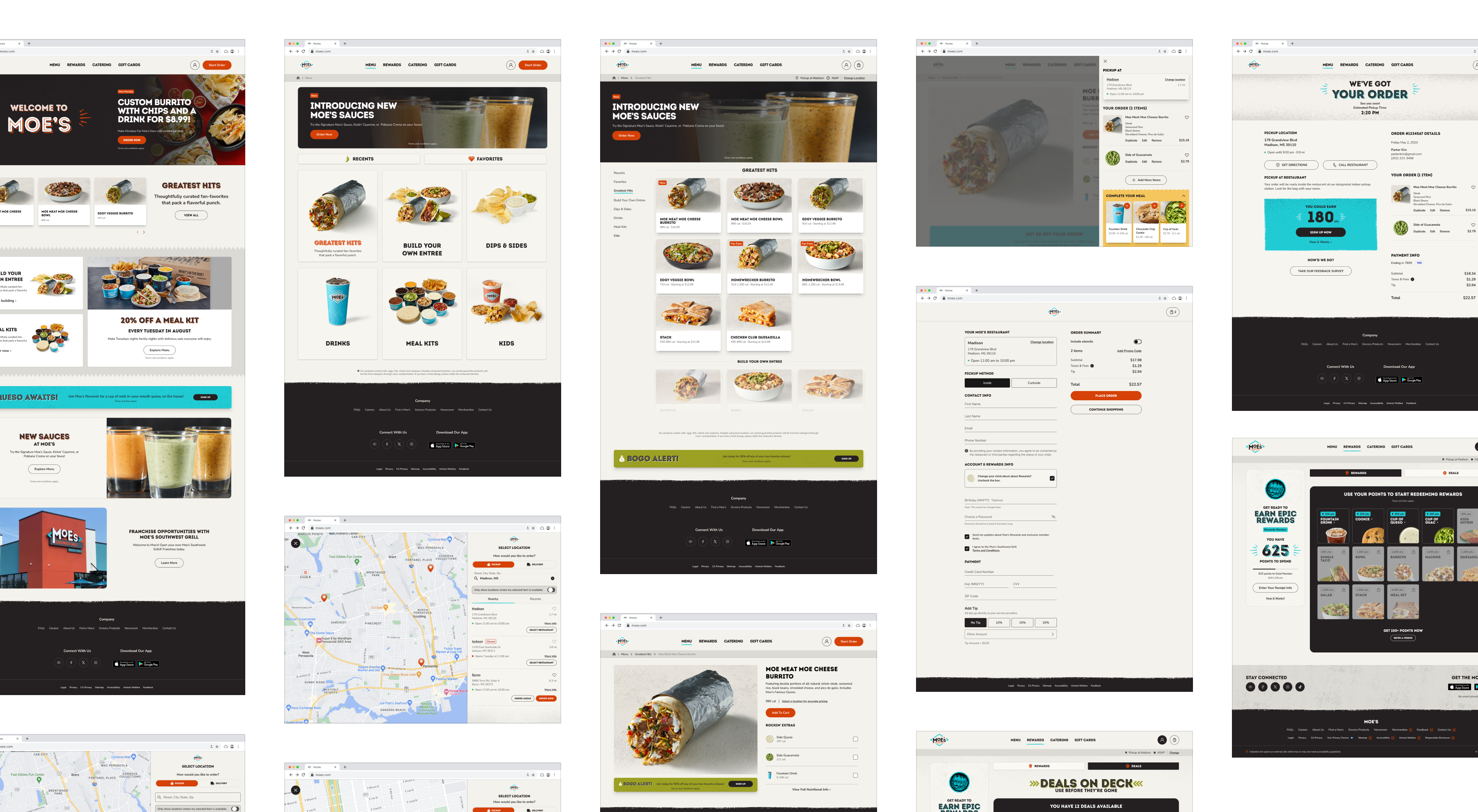
We first standardized core UX patterns, establishing consistency across high-frequency interactions.
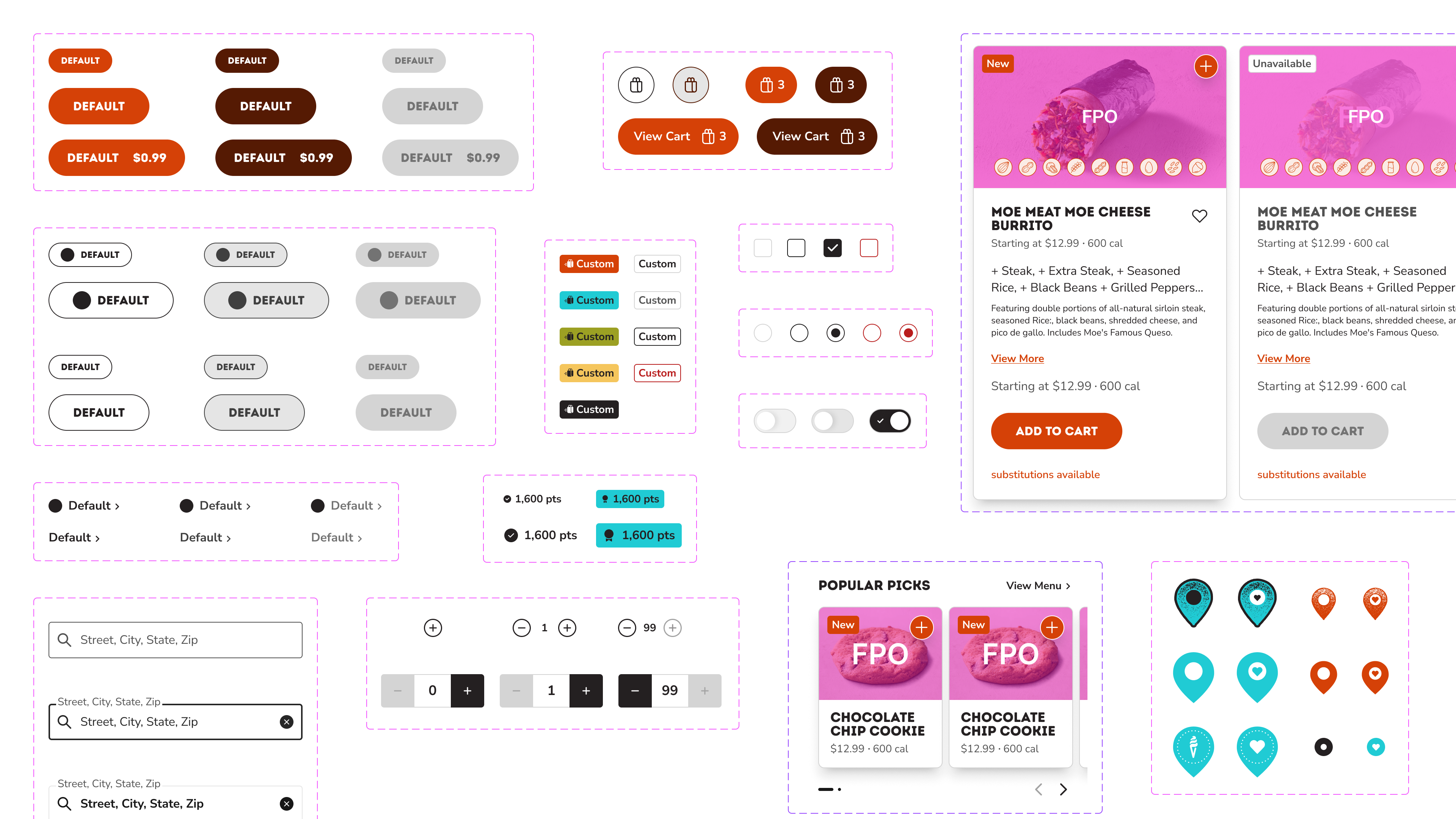
Then developed a modular, reusable component system adaptable across brands, removing the duplication of work. This enabled faster innovation and more consistent implementation.
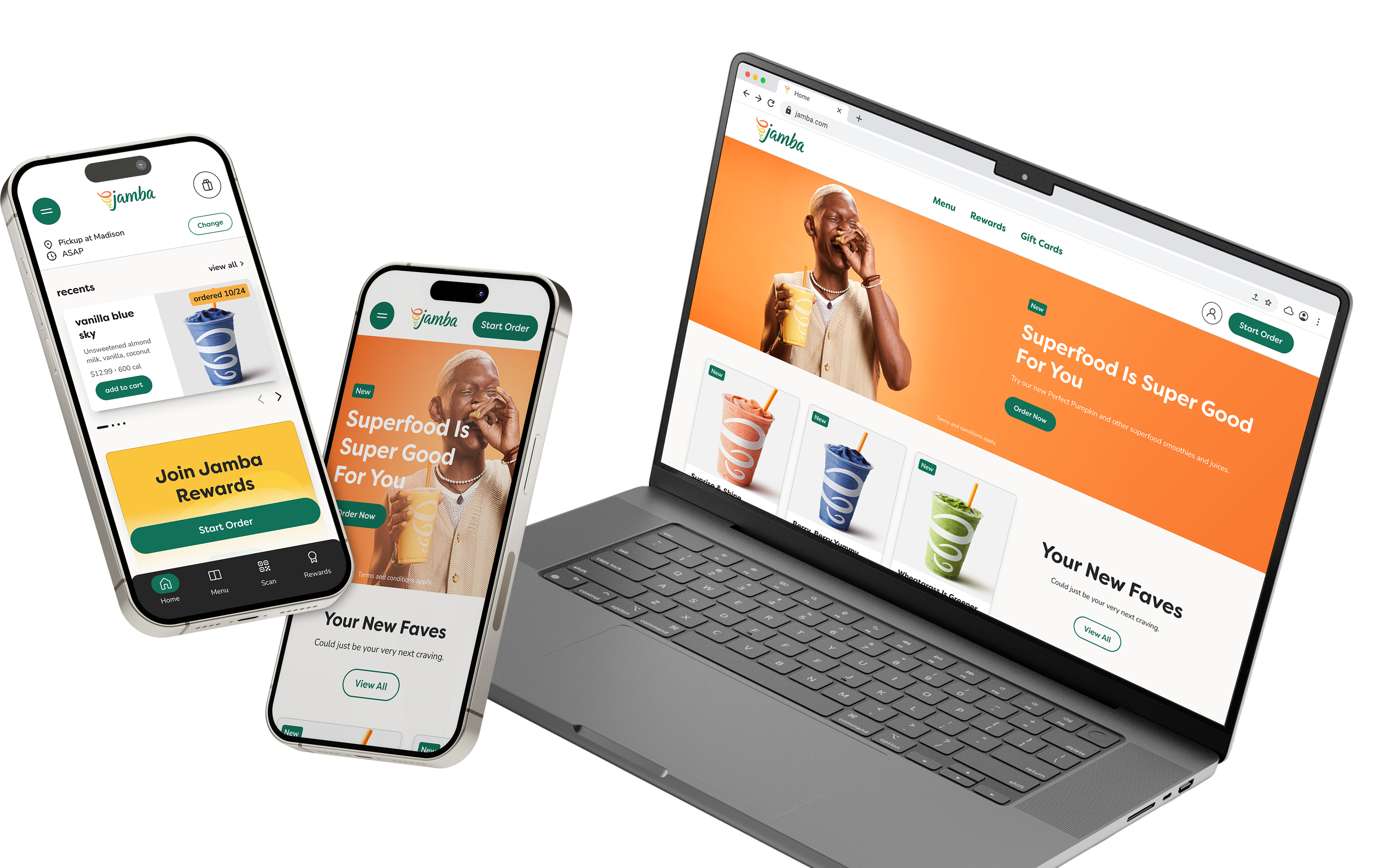
And finally, we incorporated a flexible brand styling layer allowing each brand to maintain their distinct visual identity, tone and personality. This preserved brand equity while benefiting each other from shared infrastructure (if one brand developed a new unique feature, it became available to all brands).
This shifted the organization from brand-by-brand execution to system-driven product experiences.
A comprehensive component library unified through hosted design tokens, enabled scalable theming and cross-functional alignment with engineering teams to ensure feasibility and adoption. Interaction pattern templates and documented usage guidelines created stronger foundations for scaling new features and brands.
This reduces redundancy across teams, improves consistency across features and enables faster product development cycles with lower maintenance costs.

© Brandon Herring. All Rights Reserved.
All product names, logos and brands are property of their respective owners.
All company, product and service names used in this website are for identification purposes only.

